




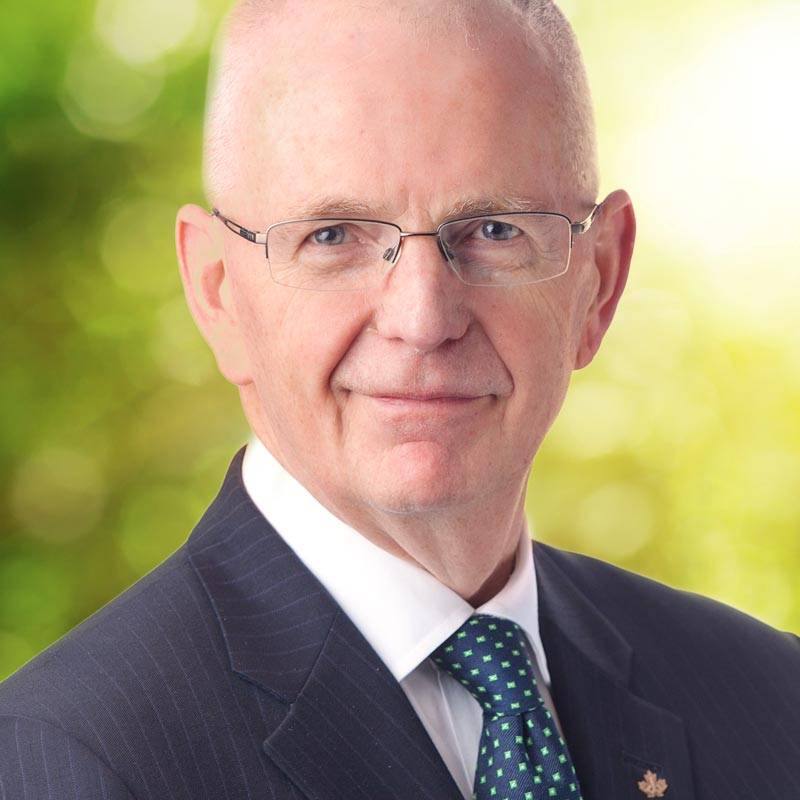
Floyd Murphy CFP, CLU, CHFC
Floyd Murphy entered the life insurance business in 1971, and is a founding member of The Nakamun Group. With an extensive background in financial planning, Floyd offers a comprehensive planning service. When he received his Chartered Life Underwriter (CLU) designation in 1978, he was awarded the John A. Tory medal for attaining the highest marks in Canada that year. Floyd was awarded his Chartered Financial Consultants (CHFC) designation in 1989 and CFP designation in 1996. Floyd has served on and chaired many industry boards and committees including the National Board of the Canadian Association of Insurance and Financial Advisors. Floyd is recognized as one of the leading authorities in comprehensive planning. Actively involved in the community, he has served on the boards of Canada Place Corporation and the Vancouver Foundation.
Contact Floyd at floydmurphy@murrick.com

Rob Ng-A-Fook, CFP
A graduate from the University of Guelph with a BSc in Economics, Robert previously worked with AGF Funds to enable financial planners to find solutions for their clients. He gave regular financial seminars to investors so that they could properly understand the mutual fund world. Robert also spent time in the health care industry where he learned the importance of being properly insured. Having completed the comprehensive Certified Financial Planner accreditation, Robert uses his mutual fund experience and insurance knowledge to give you peace of mind through a well designed financial plan. Your investments are the offensive side of the financial plan and your personal insurance is the defence side of the financial plan. Robert makes sure both are performing properly together.
Contact Robert at robngafook@murrickfp.com

Bob Greenhalgh, BComm, CFP, CIM
Bob is a 1998 Bachelor of Commerce graduate and has completed the Canadian Securities Course (with honours) and earned both the Certified Financial Planner (CFP) and Chartered Investment Manager (CIM) designations. He worked in various financial roles in the hospitality, mining, and pharmaceutical industries before focusing his career on financial services in early 2007.
Bob’s broad industry experiences are particularly valuable in understanding the financial needs and challenges facing professionals and business owners of all ages and at all stages of their careers and lives. He’ll help you set financial goals that reflect your life goals, plan a strategy to reach those goals, and implement the plan, while helping you to be financially prepared in case of unexpected events.
When he’s not in the office, Bob enjoys golfing, mountain biking, scuba diving, snowboarding, traveling, and spending time with family and friends.
Please contact Bob at bobg@murrick.com or phone him at (604) 688-5158 to discuss your financial planning needs.

Gina Singh
Gina entered the world of Finance and Banking in 2000 after attending Kwantlen University College where her studies were focused in Business Administration and Entrepreneurial Leadership. Previously she worked with TD Bank Financial Group where she completed sales and management roles in the retail bank, TD Wealth as a Business Development Manager, Direct Investing, as well as a Regional Sales Manager for TD Investment Solutions. Gina held regular seminars to educate clients around topics such as Markets & Research Analysis and Trading for beginners. Working for over 16 years at a major financial institution gave her the knowledge to serve as Manager at Murrick Financial Planning. Gina has obtained certificates such as Investment Funds in Canada, Canadian Securities Course and Branch Compliance Officer course. In addition to investments, Gina has an extensive knowledge of real estate secured lending, business banking and personal banking. Her main goal is to ensure her team is happy and productive, and that all clients feel valued.
Contact Gina at ginasingh@murrick.com